As we waited at Sapporo’s New Chitose airport for our luggage to appear on the arrivals carousel, a door behind us opened. Two short, slender women in tight skirts and low heels emerged, carrying one of our bike boxes. They didn’t seem at all bothered by the ungainly 27 kg they were lifting elegantly onto our waiting trolley. We helped with the second and they were off, not a hair out of place.
Their help was repeated with equal grace by the Yamoto man who helped us forward our panniers and by the Japan Railway employee who went out of her way to help us lug our bike boxes on the train to Otaru, our destination.
We were overwhelmed with the helpfulness the Japanese are renowned for and we hadn’t left the airport yet.
Otaru was where we began to orient ourselves to Japanese culture before we head off on a three-month cycling tour. We’re pleased that we came here rather than Sapporo. Although it’s a touristy small city, it’s walkable and there’s little traffic.
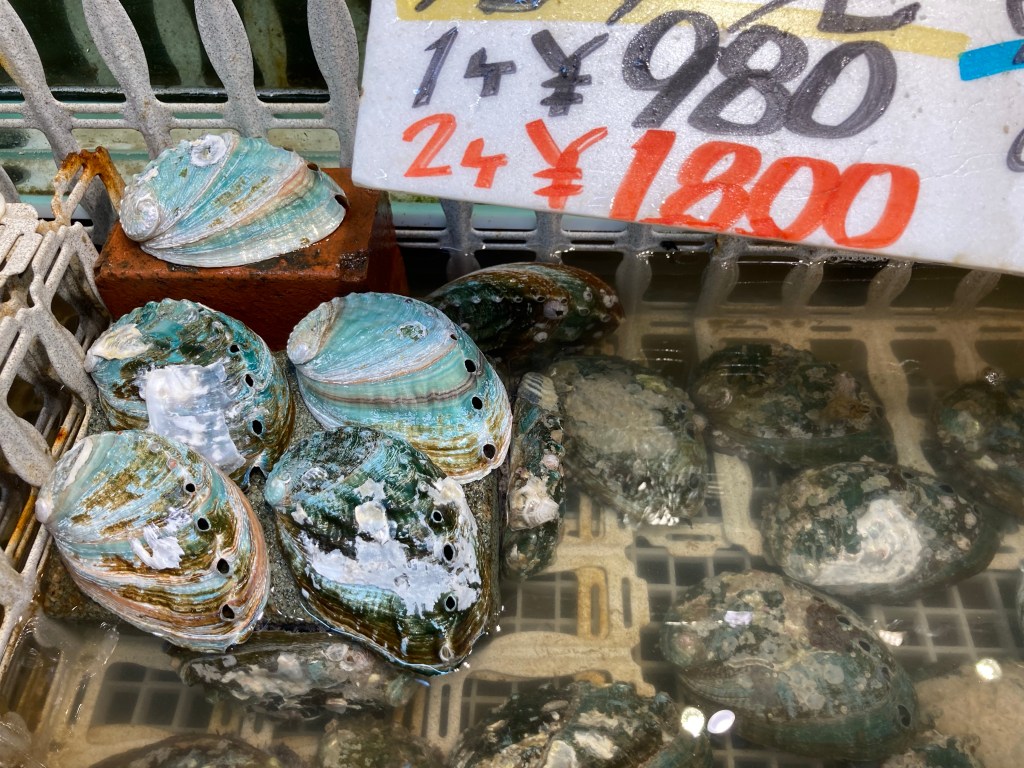
Our first days were spent exploring food, observing locals at work and play, wandering along the famous canal, visiting the fantastic Sankaku Market (so many fish, crabs, clams, oysters, whelks, octopuses, many of them alive in crowded tanks), getting SIM cards for our phones, and trying the Otaru beer. Google Translate has become an inseparable companion as we ‘read’ the text on packets of food and on menus, and try to converse with Japanese. Some translations must be pretty wayward, given the effort that some unlucky Japanese appear to put into reading the translations we present them.
Otaru has an interesting history. After Hokkaido was colonised by the Japanese in the late 1800s, largely displacing the indigenous Ainu, Otaru quickly became a major port for herring fishing. Another major industry developed with the manufacture of glass floats for the herring fleets; Otaru is still known for its glass.
The town became a centre of trade with Russia and China. In 1899, under royal decree, it was opened to trading with the UK and the US. Western-style banks and Japanese-style storehouses were built side by side along the canal that was put in to facilitate trade. I’ve read that Otaru is one of few Japanese cities that show evidence of late 19th and early 20th century westernisation in Japan.
Otaru was also used to hold Aleut prisoners of war after Japan occupied two islands in the western Aleutians in 1942. Then Otaru was bombed by the US in July 1945, as part of World War 2.
Today, it still has a busy fishing industry, and seafood is everywhere.
In between our wanderings, we had a day trip to hectic Sapporo, then another unexpected trip there on a day of pouring rain to replace a ruined tyre and brake cable. We were ready to ride.
 japanonabike.blog
Leave a comment