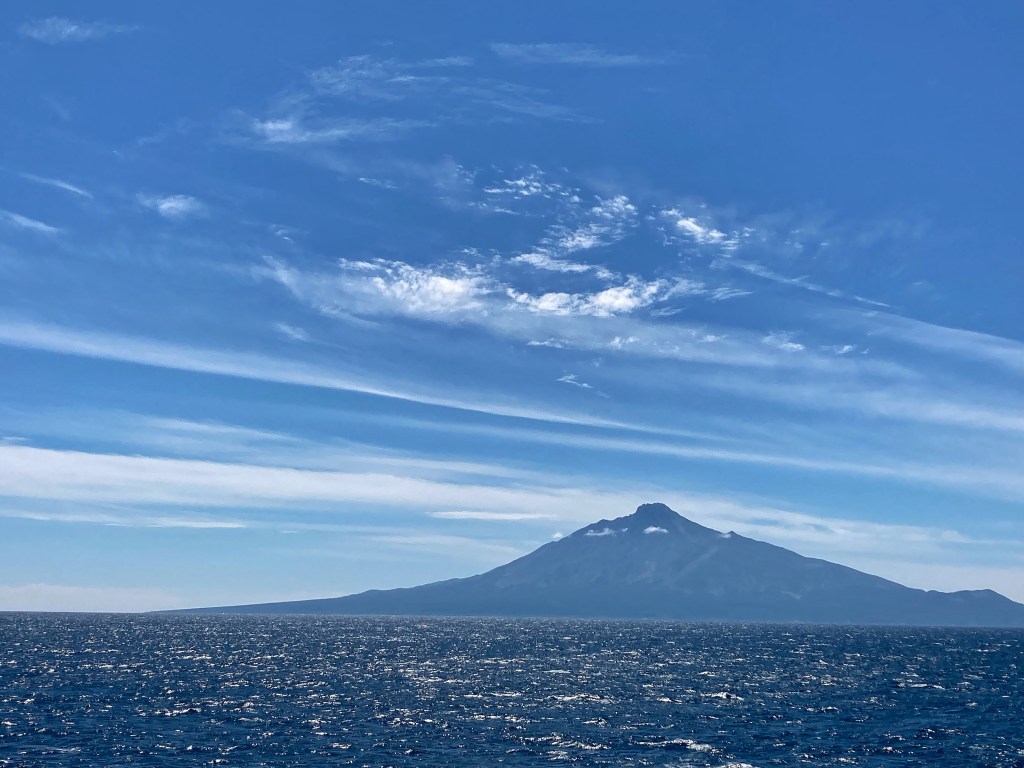
The main attraction of Wakkanai for us was the access it provides to the islands of Rishiri and Rebun. Several ferries a day go to each island, and so we boarded one going to the Rishiri port of Oshidomari. After the rain, the morning was sparkling. The sea was blue; the sky was blue. We’d been riding for a week within view of the fabled conical volcano of Rishiri, but low cloud had prevented us from seeing it until now. It, too, was blue in the light.
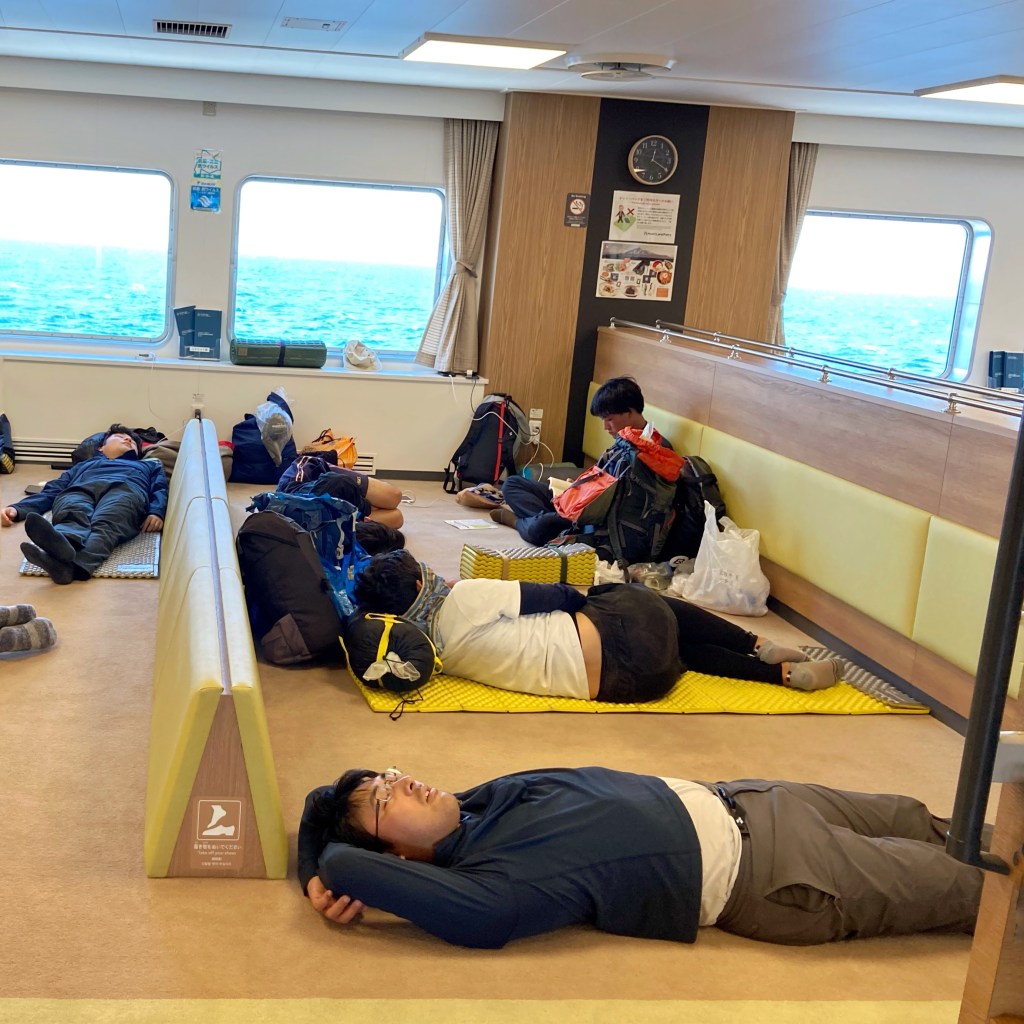
Our economy-class tickets bought us a space on carpeted floor. We did what the locals were doing and napped, in between moments admiring Rishiri, and in less than 2 hours we were disembarking on its flank. The whole island is this single volcano that rises straight out of the sea.
One of the names for the island is the rather lovely Floating Dream Island, which aptly described how it looked from the ferry. It’s more prosaic usual name is derived from the Ainu ri-sir, meaning high island. The Ainu were among the original human inhabitants of Hokkaido, and many place names in Hokkaido contain Ainu roots. Ainu are believed to have been here since the 1100s, hundreds of years before Japanese (an unrelated people who came from the south) moved onto the island and eventually claimed it as their own, subjugating the Ainu in the process. Like many First Nations people, Ainu today are reclaiming their rights to live in harmony with their own worldview.
We finally on the fabled island, but …
Claire didn’t want to ride! Nevertheless, we pointed our bikes southward. The road hugged the coast and took us through small fishing villages. After 10 km, Claire’s lethargy had degenerated to illness. The next 30 km to our campsite was a push through fever, body aches and coughing, and the effort of trying to be distracted by beautiful scenery and intriguing glimpses into life on the island. On cleared and gravelled squares next to houses, fisherfolk had laid out strips of kombu kelp to dry, much of it under netting presumably to prevent it from being blown away. Rishiri kelp is prized in Japan and expensive to buy even in the north.
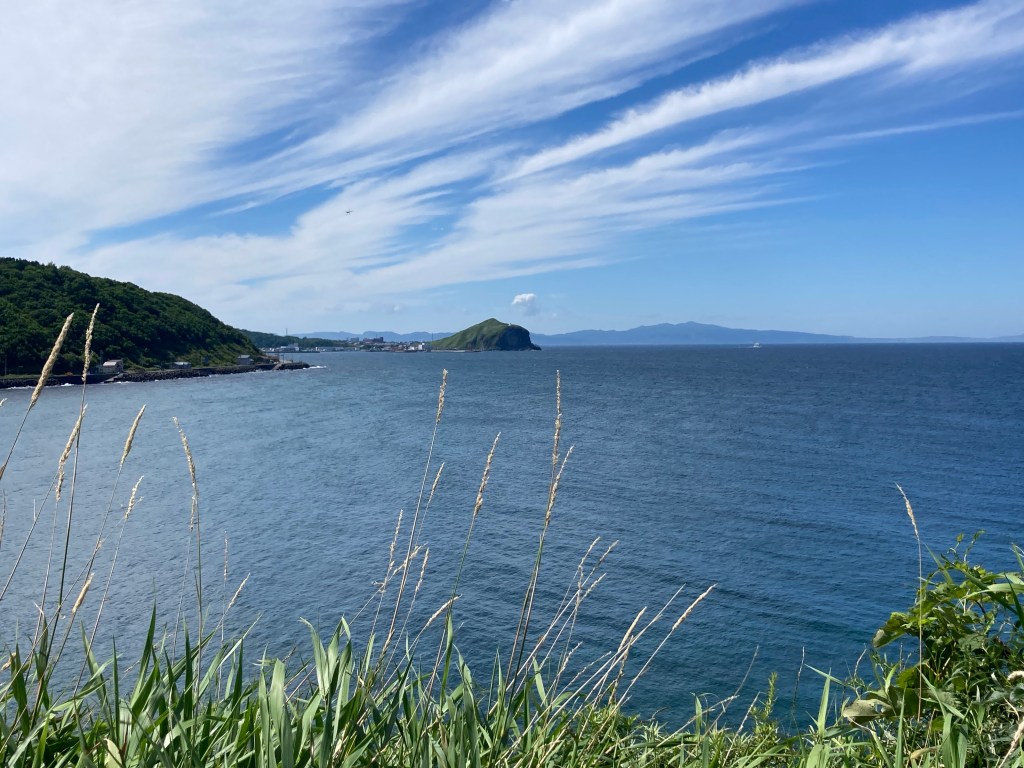
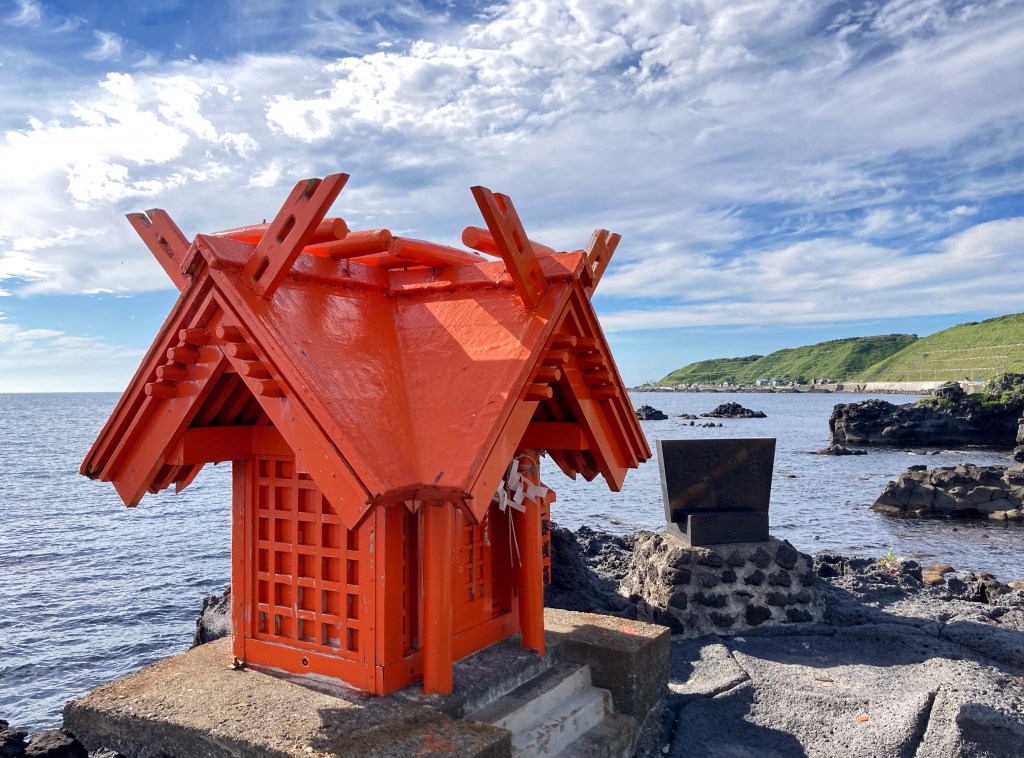
Rishiri feels like another world. It’s a beautiful one. We stopped several times to take in views of the dramatic shape of the volcano, which was using its mythical power to curve the wind direction around itself. We passed what must surely be one of the tiniest Shinto shrines in Japan, Itsukushima Benten Shrine of the North, about a metre high and bright orange, sitting on Dragon King’s Rock. We made it to our camp above the town of Kutsugata and Claire collapsed into the tent as soon as we had it up. A night on damp ground wasn’t a great idea (!), and the next day ended up being a forced rest day. Dave organised a cabin for us to move into.
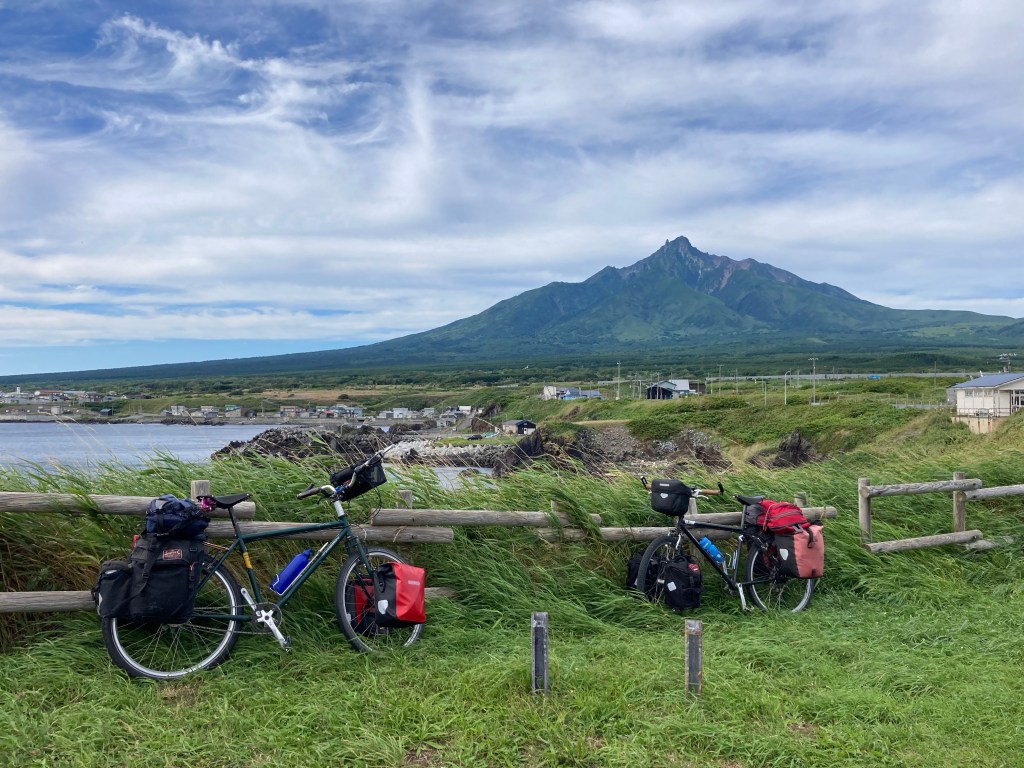
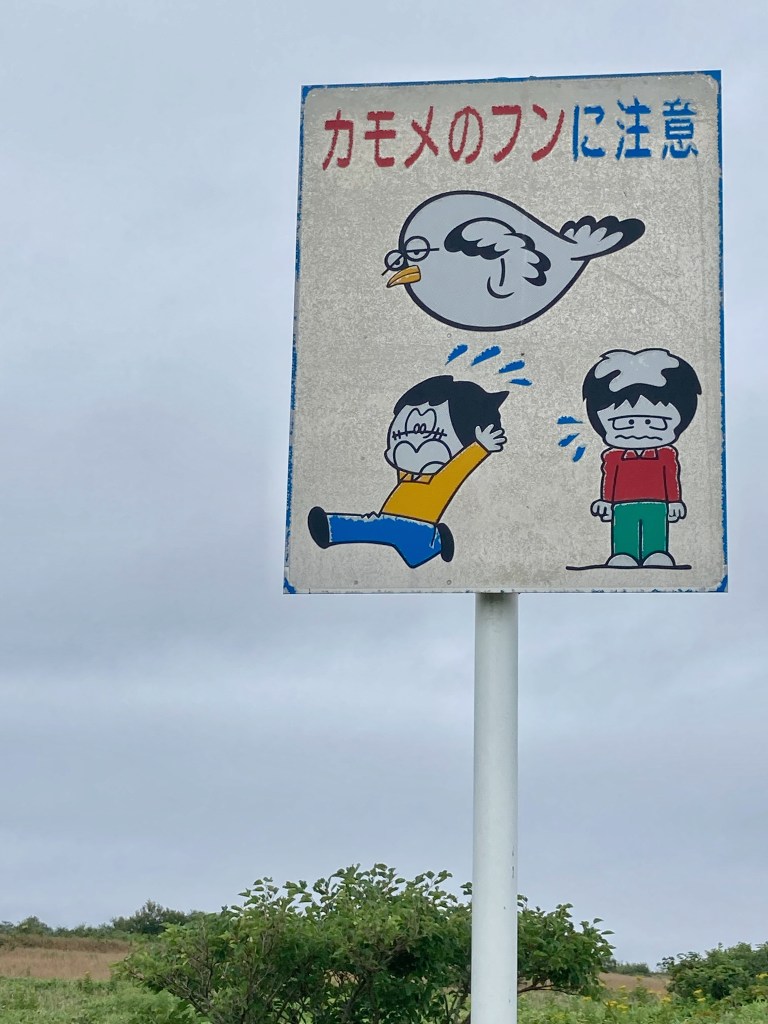
Having come so far, we didn’t want to call it quits, and on the third day finished our circumnavigation of Rishiri. For this 15 km section, we took the bike path that goes around much of the island. It bypasses the villages, but takes riders through grasslands and forest. The main danger here is gulls relieving themselves. The fine weather had gone, and cloud hung almost to sea level, so we could no longer see Rishiri.

Claire was still sick, and rested, sagging like a sack of potatoes, for the ferry ride to Rebun. This little island felt even more other-worldly than Rishiri. It’s name is derived from the Ainu repun-sir, meaning offshore island. A more romantic alternative is Floating Flower Island, which seems appropriate since the island is a haven for many species of alpine wild flowers that in this wild climate grow from sea level to the island’s highest point, a humble 490 m. There was no energy for flowers on this day, and we had 18 km to ride from the port of Kafuka to our campsite at Funadomari in the north. The low cloud was hiding even the small hills of Rebun, a headwind was making us work for every kilometre gained, and rain was threatening.

We had another damp night in the tent, and the next morning Dave, too, had succumbed to the cold virus. We decamped in wind and rain, and doggedly made our way back to Kafuka, where we both sagged likes sacks of potatoes in the ferry terminal while we waited for the next boat back to Wakkanai.
It was disappointing to do none of the hiking we had planned on doing on the two islands, and to miss what flowers were still in bloom, and a couple of other parts of the islands we had intended to visit, but we needed slow, dry time indoors to recover.
 japanonabike.blog
Leave a comment