Rested after a day indoors in Iwanai, we left the coast and began the eastward leg of our warm-up circuit. We were granted a kilometre of flat riding, and then began a 23 km climb for an 860 metre gain in altitude. We laboured in the heat, sun beating down on us, and heat radiating up from the bitumen. The temperature was 30 °C by 10 am, and humidity about 90%, with no shade from the tiered vegetation around us.
The summer vegetation is so lush and dense, the smell of expiring plant life is palpable. It’s hard to believe that, come winter, these hills are deep in snow.
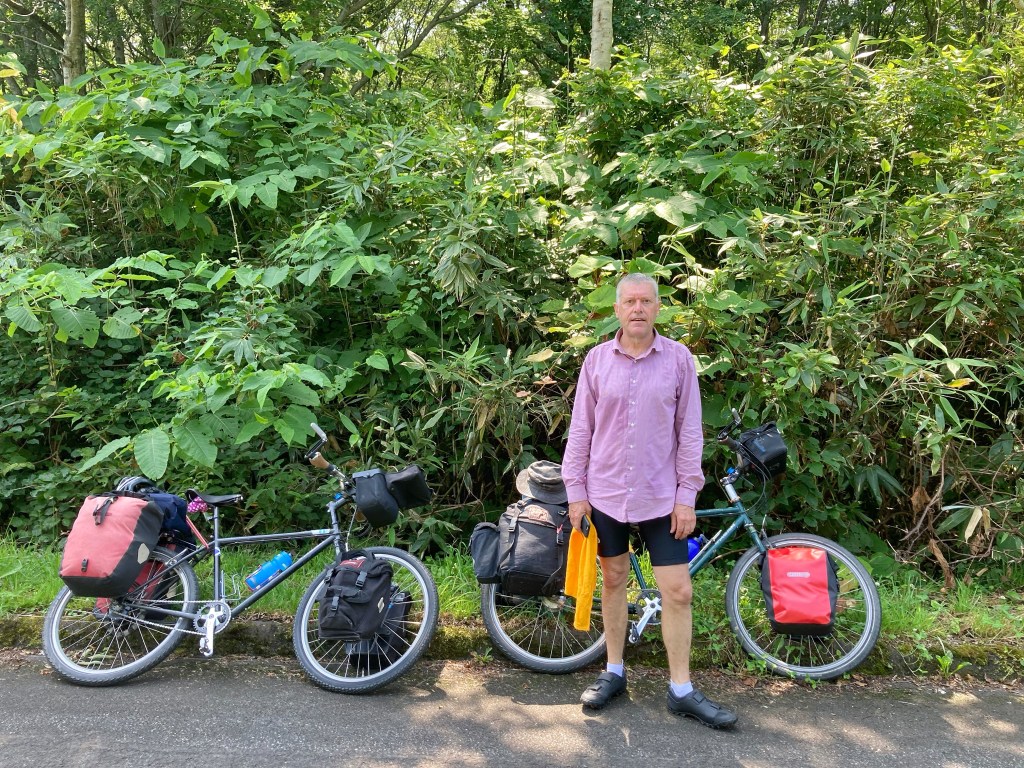
As we pedalled and panted slowly uphill, motorcyclists zoomed past, waving in a greeting we soon recognised as a sign of encouragement and respect from others in the Kinship of Two Wheelers.
When a rest house came into view near the top of the climb, we immediately implemented our new strategy for lowering our core body temperature: eating delicious Hokkaido ice-cream.
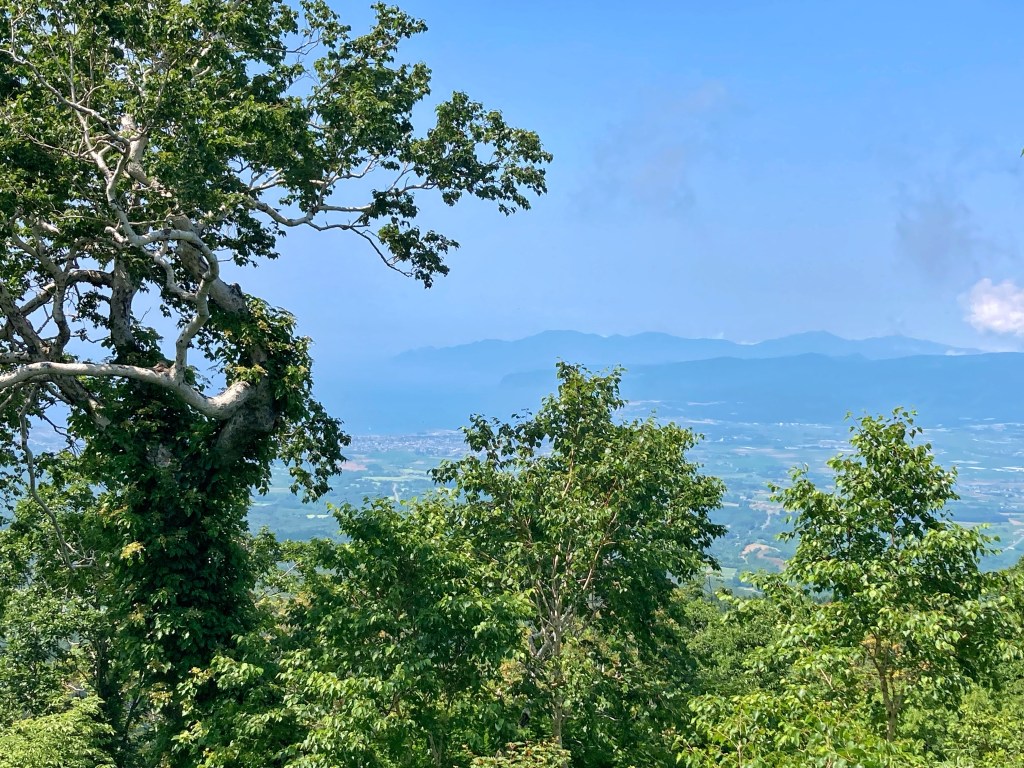
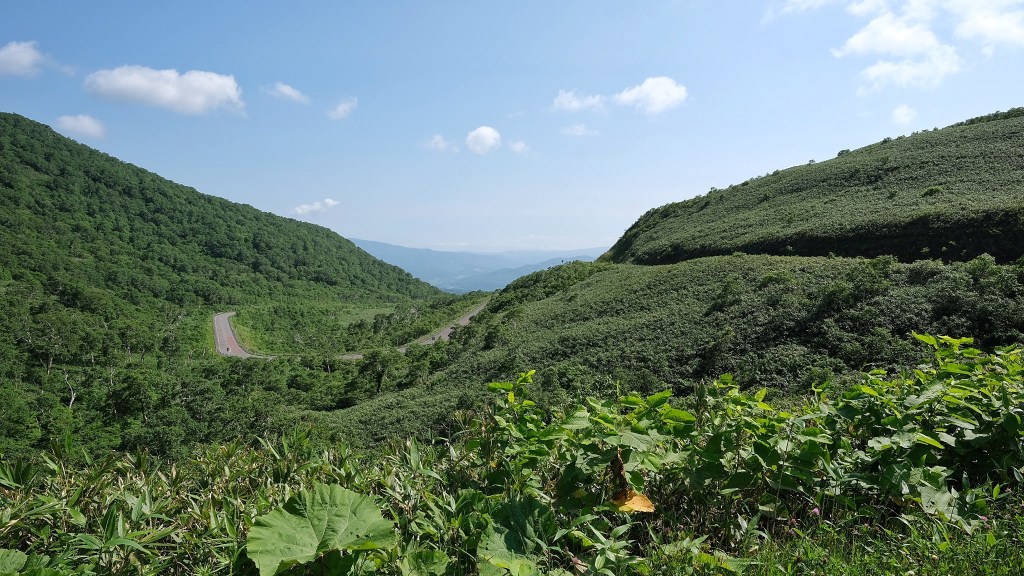
Somewhat revived, we pushed on, dreaming of the delights of the onsen that awaited us after a flying downhill of 4 km.
It was closed and overgrown.
Our hearts sank. We found another onsen with camping nearby, but had to dig deep to get back into climbing mode to ride uphill 5 km to get there.
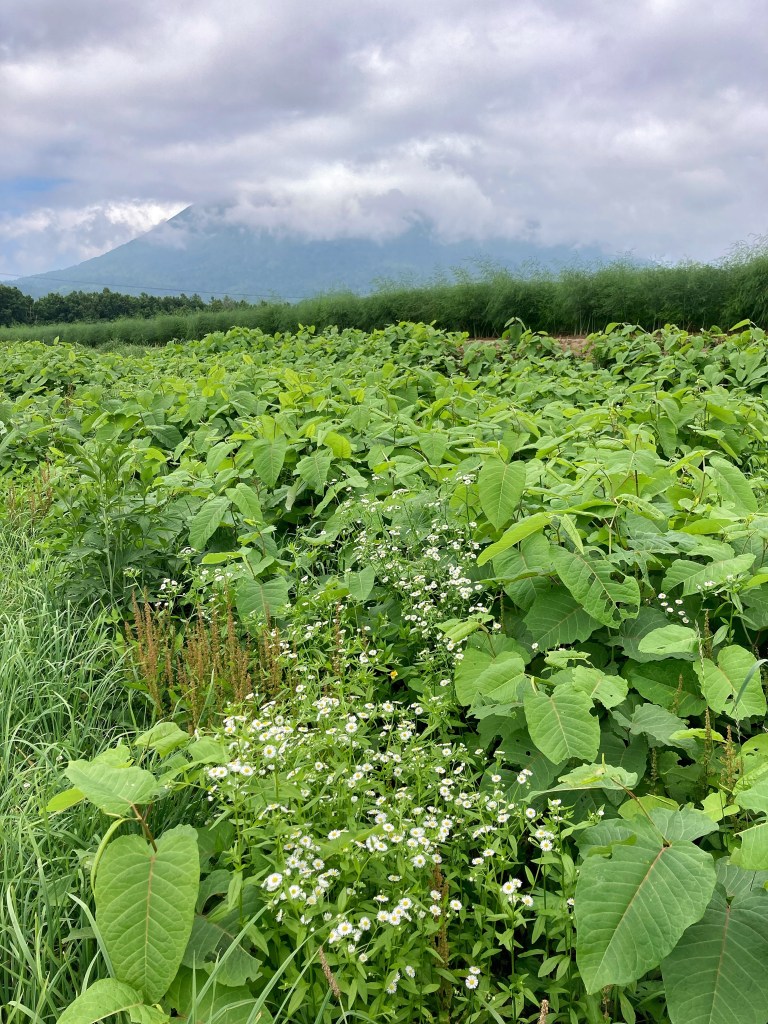
The downhill continued the next day, as we curved through bends like swallows cutting arcs through the air. A sharp little incline after a river crossing brought us down to earth, then we pedalled the rest of the day on a flat gradient, stopping to camp at the foot of the fabled Mt Yotei. It is one of the 100 famous mountains of Japan.
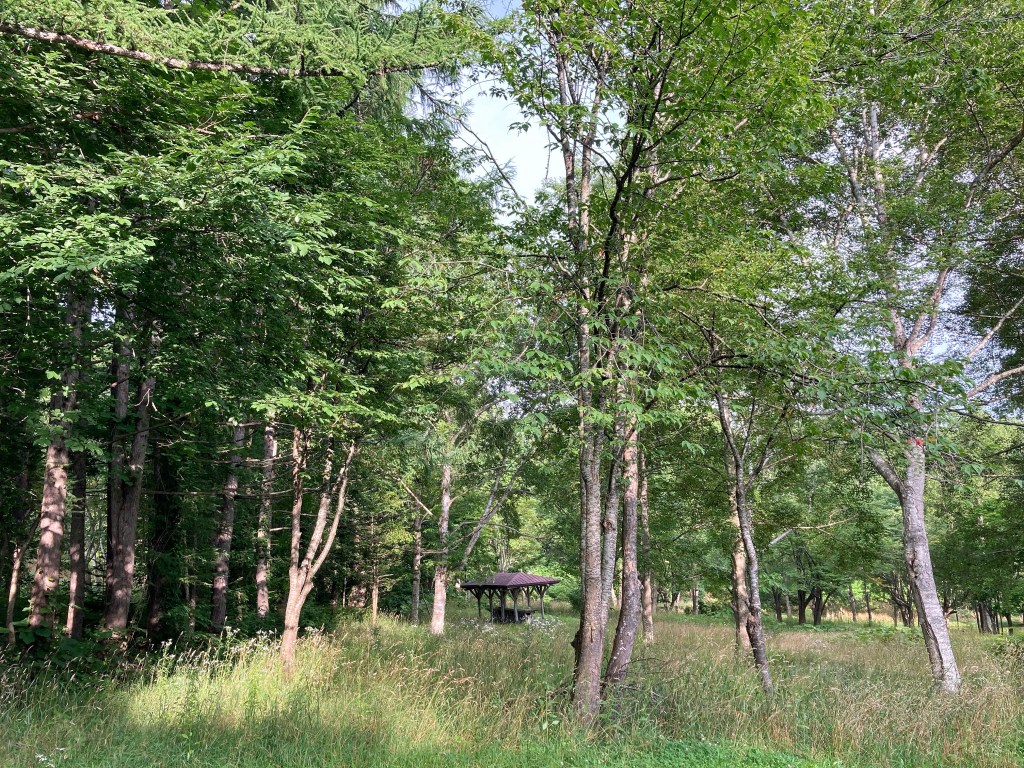
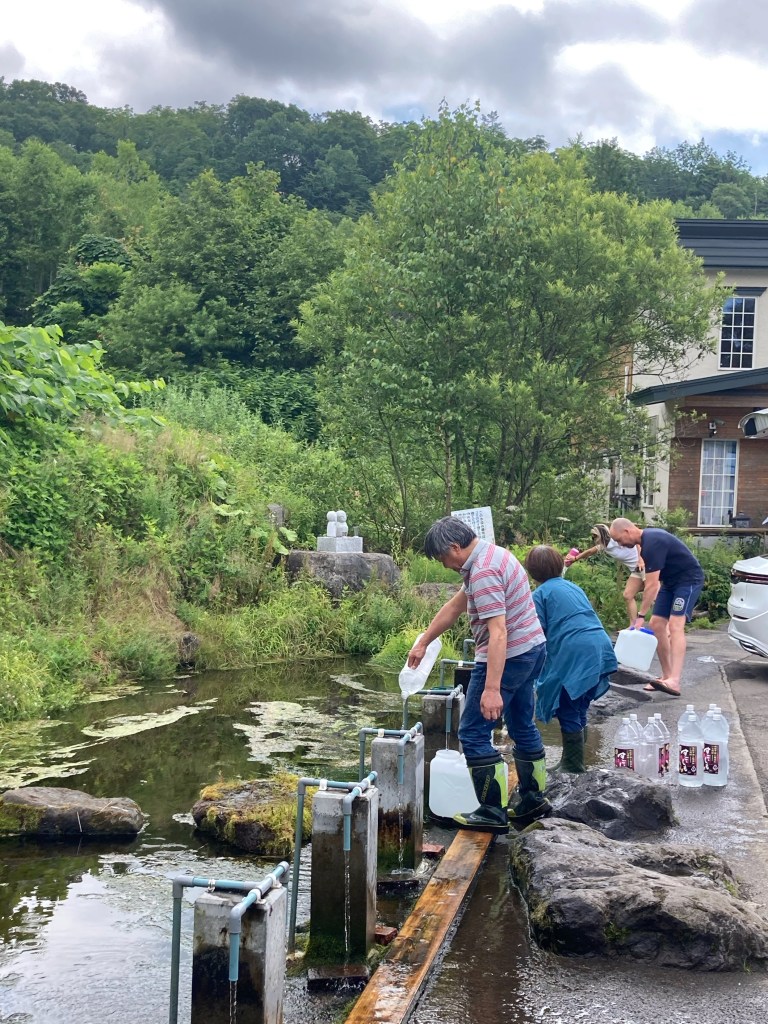
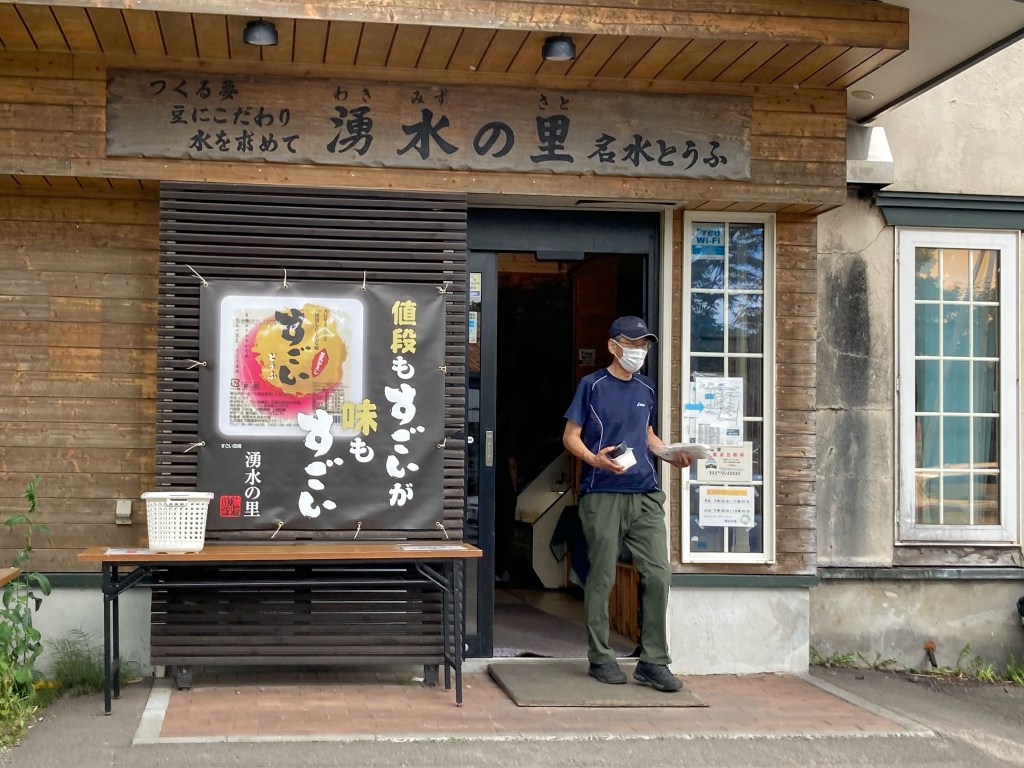
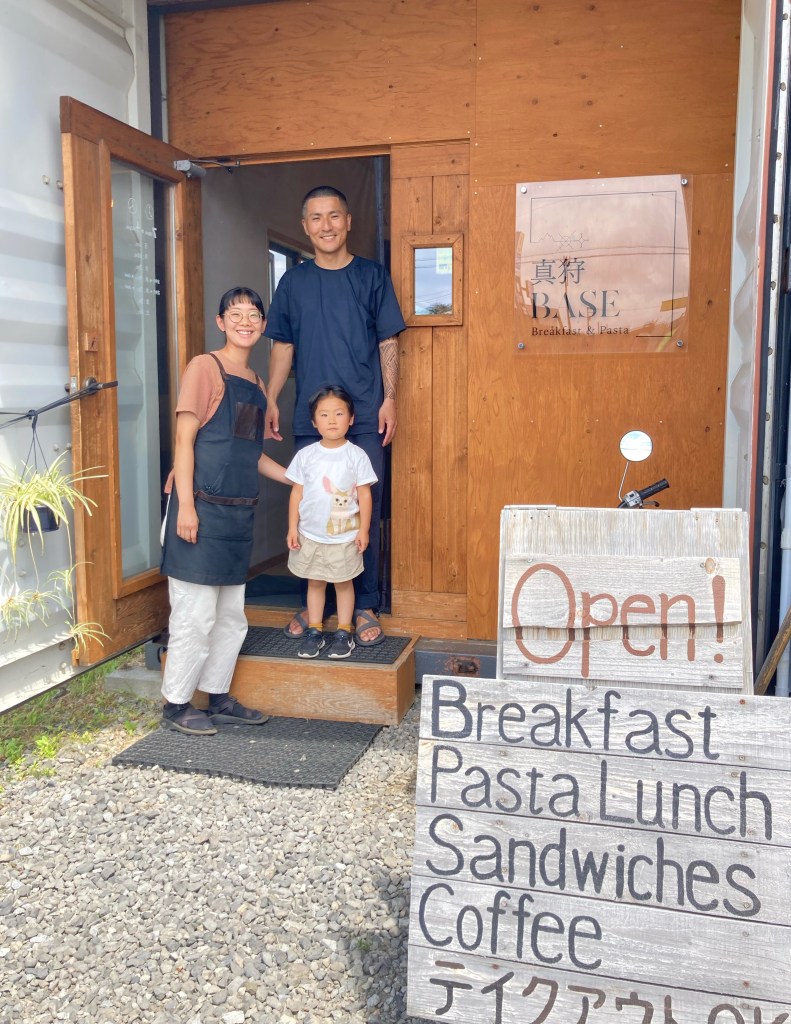
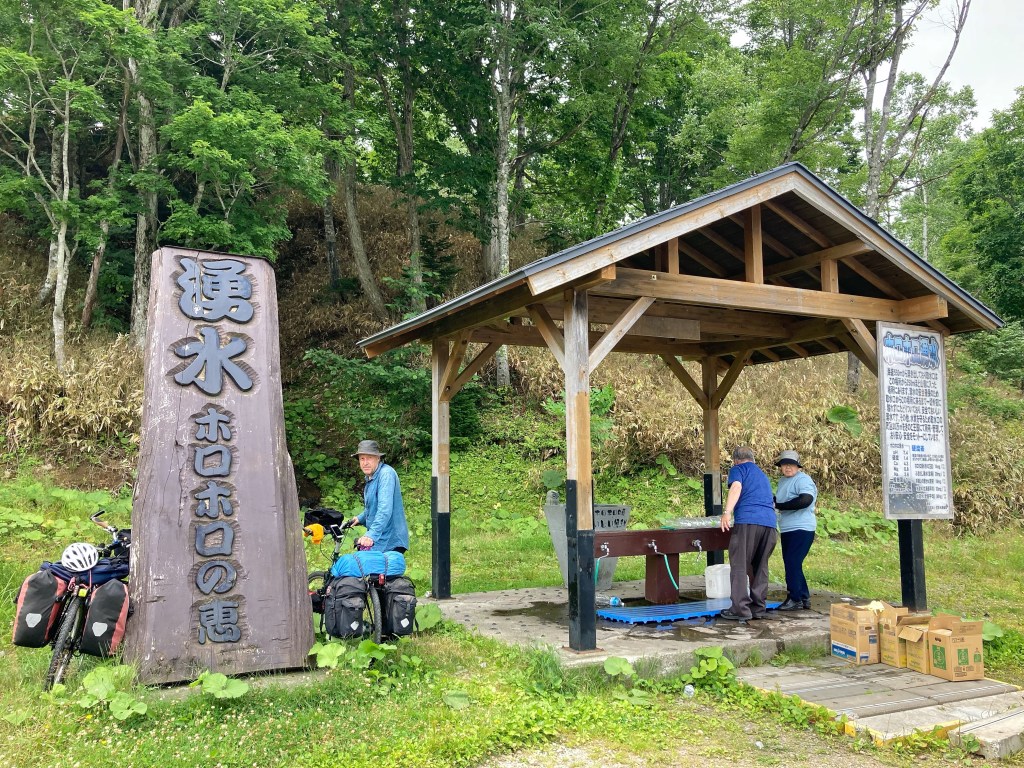
Three treats awaited us in the neighbourhood. A spring of cool, sweet water from Mt Yotei spouts right next to highway 66. We joined the locals and filled up. Next to it is Wakimizu no Sato, a tofu maker that uses traditional methods and Yotei spring water. With these it makes the best tofu I’ve ever eaten. And just down the road, at Makkari Base, we drank the best coffee we’ve had in Japan (an experience of all of 2 weeks).
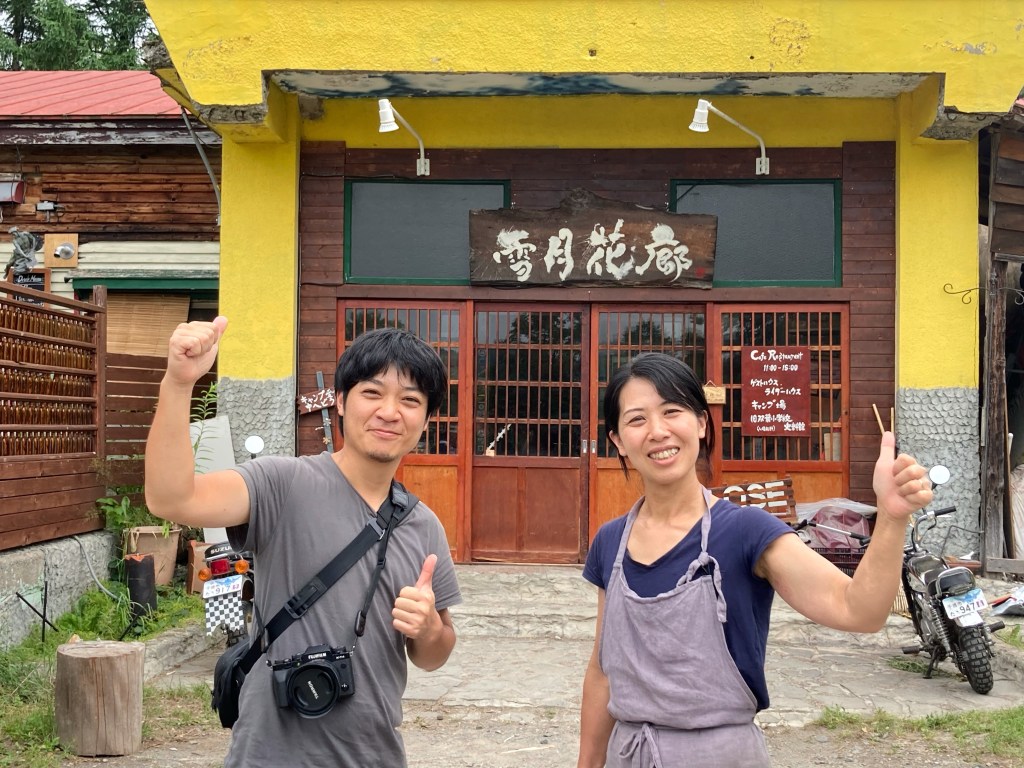
We worked up another day of heat stress, which was relieved a little by cheering waves from the Kinship of Two Wheelers, and didn’t end until we pulled into our night’s camp, at the quirky and delightful Setsugetsu camp and rider house, which is basic, free accommodation for anyone travelling on two wheels. (We paid for camping.) Maiko and her family have converted a disused primary school. She also cooks all the meals, so we feasted on beautifully cooked, simple Japanese food. The bikers got into a drinking party after dinner, but we were in bed by 8 pm!
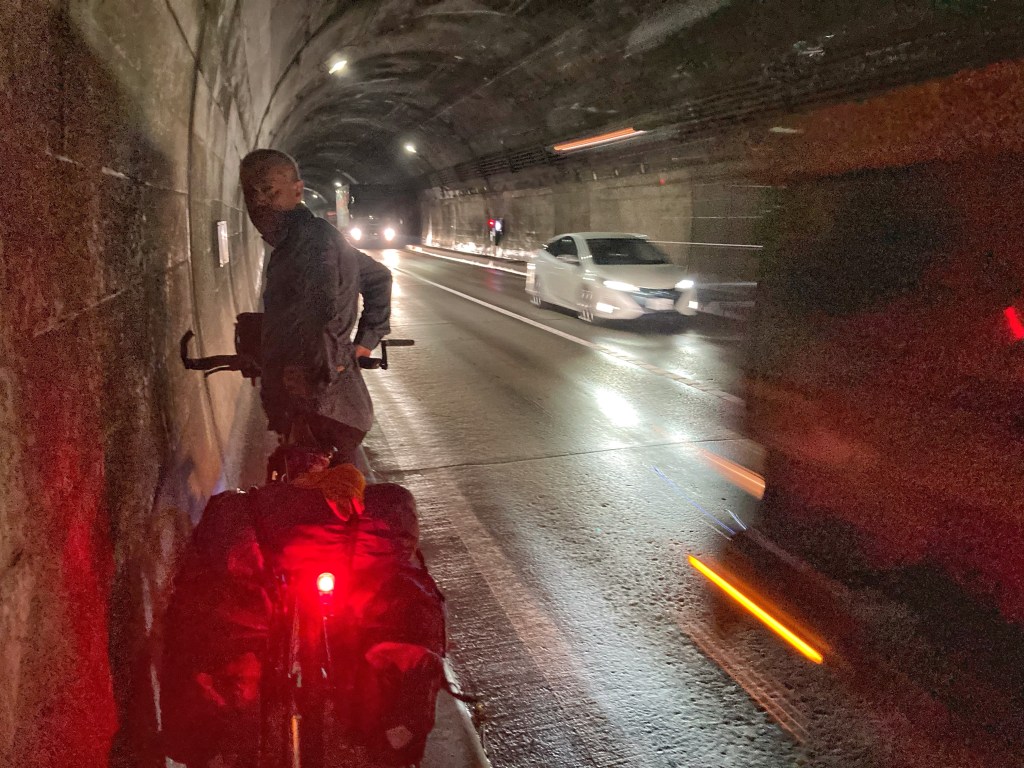
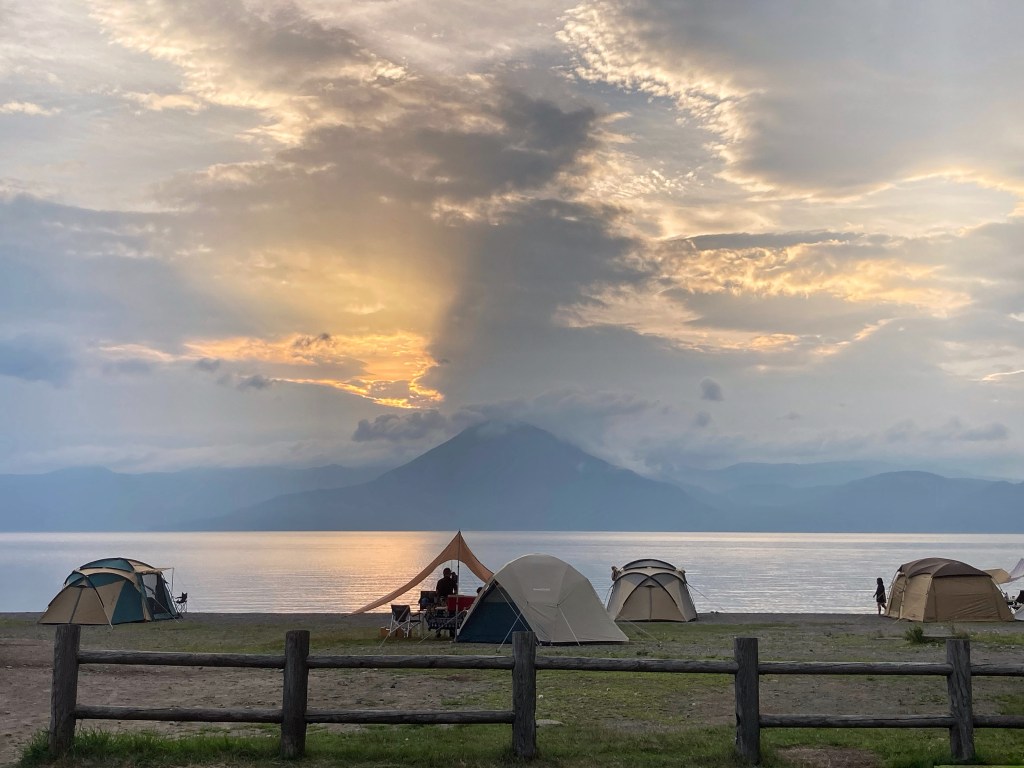
The next day’s ride saw a return to tunnels. There were only 3, but 2 of them were awful. As we approached Lake Shikotsu, we joined highway 276, which we discovered — about 100 metres in — is a truck route to the port of Tomakomai. The highway lanes are narrow, only just accommodating the trucks. We lost our shoulder to ride on at the first tunnel. It was 1.6 km long and had only a bike-width footpath for pedestrians, too narrow to ride with laden touring bikes and the occasional obstacle protruding from the tunnel wall. It was a scary walk through with the bikes. The second tunnel was the same, but only 335 metres long, so we decided to sprint through on the bikes. That was more terrifying than the first one. We stopped on the eastern end to calm our nerves, eat lunch and psych ourselves up for the last tunnel. What a wonderful surprise that it had a wide footpath that continued all the way to our campsite on the shore of Lake Shikotsu.
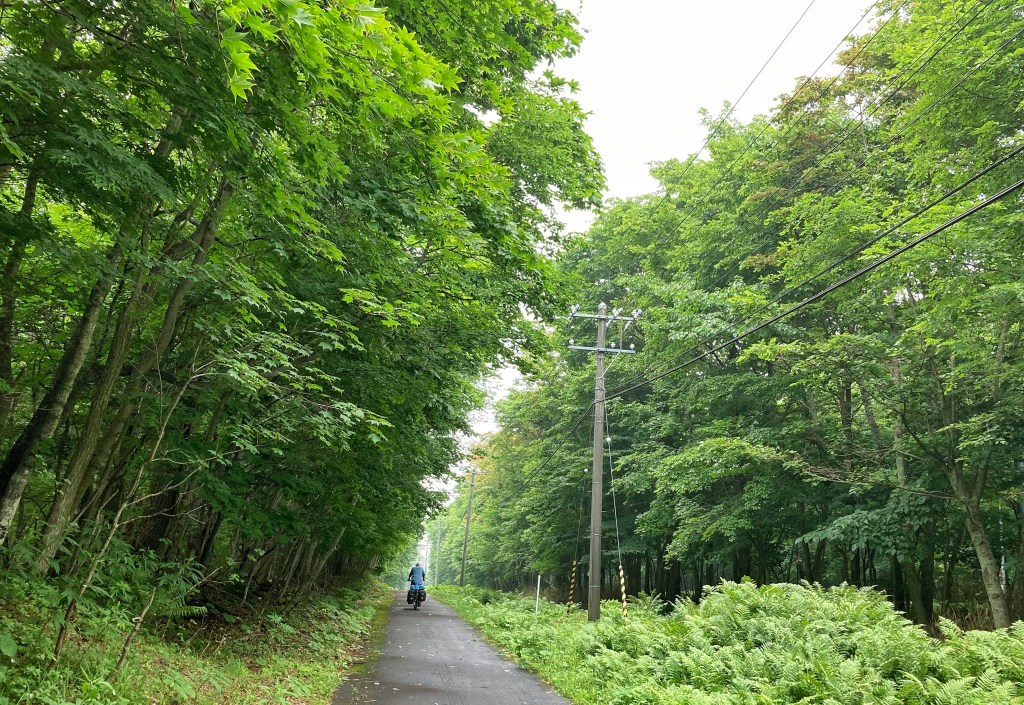
The next morning, on our last day of the first leg of our trip, we were in for another happy surprise. We came across a bike path that kept us in shade and off the highway for 20 km all the way to Chitose, a short, urban ride south of our campsite at an onsen in Eniwa. Away from the trees, it was another terribly hot and humid day. Making short work of putting up the tent under a tree, we spent the afternoon cleaning up and cooling off indoors in the onsen, which had a fabulous cold pool among the hot pools.


 japanonabike.blog
Leave a reply to Vid Cancel reply